When an air conditioner cuts out during a humid 98°F Green Country afternoon or a furnace fails during a sudden arctic front across Tulsa County, you need immediate mechanical relief rather than high-pressure sales talk. Our team provides fast, straightforward diagnostics and technical service for residential heating and cooling systems throughout the metropolitan area.
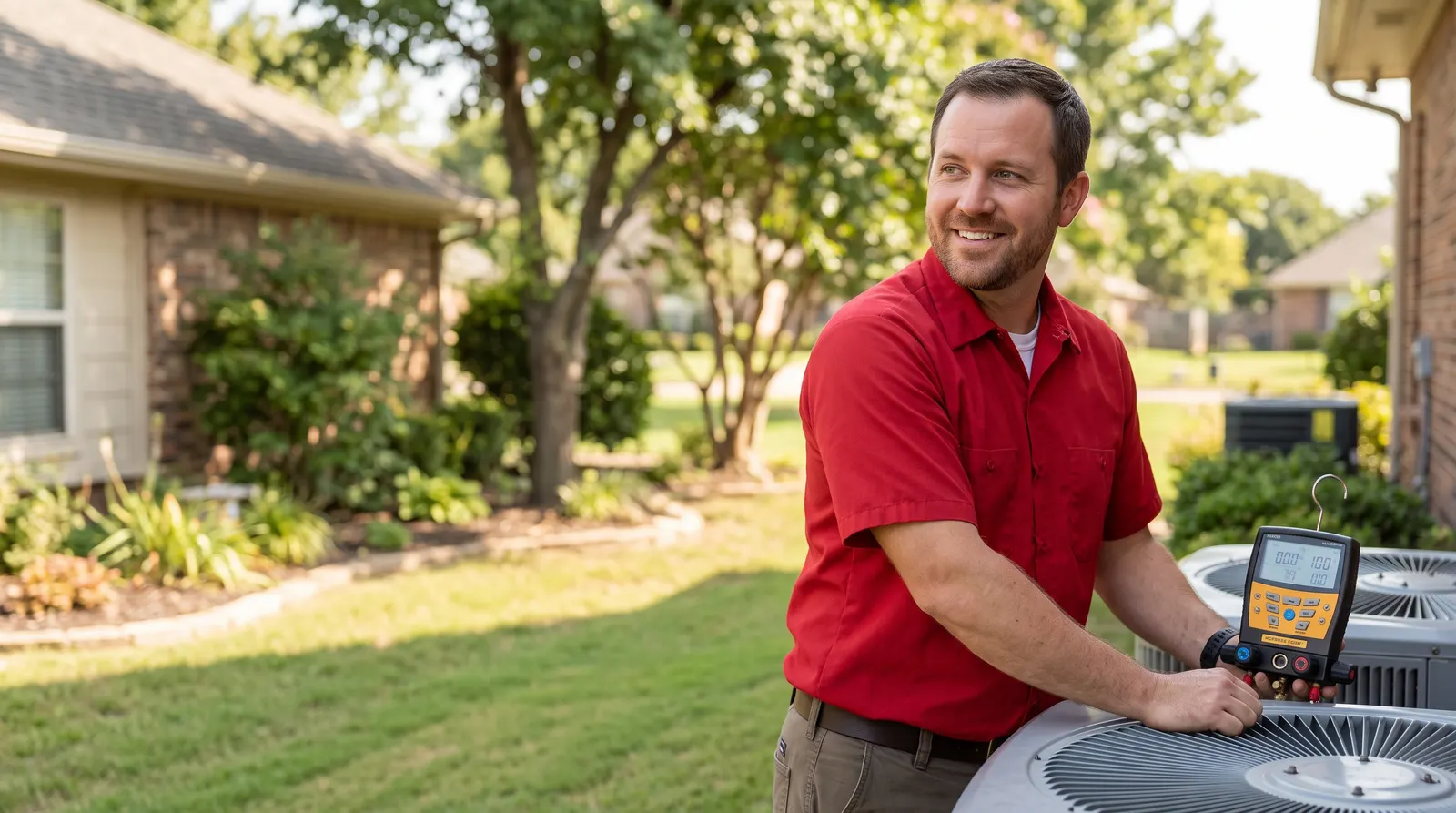
HVAC in Tulsa is the mechanical heating, ventilation, and cooling service that maintains safe indoor temperatures and balanced indoor humidity across Green Country residential properties.
Every service reflects the same meticulous attention to detail — whether it's a single job or a larger hvac project across tulsa.
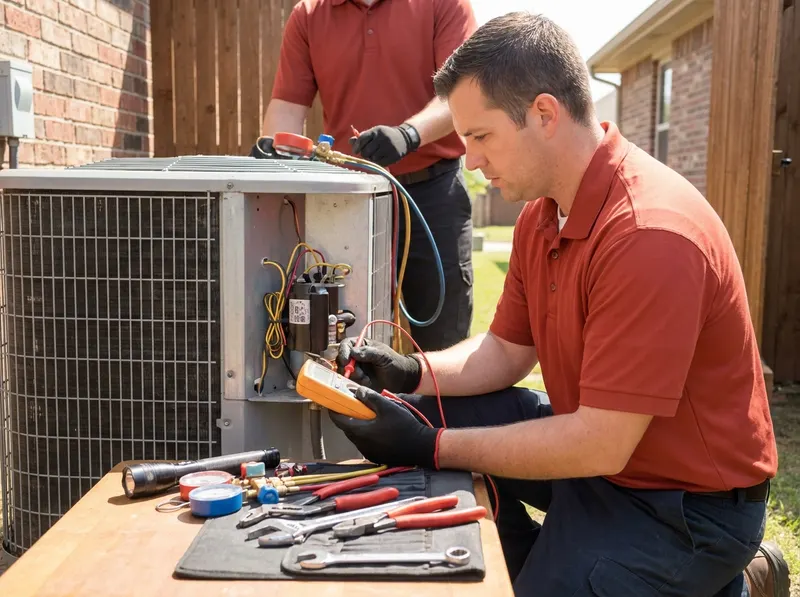
Restoring cooling performance when air handlers blow warm air, condenser coils freeze over, or outdoor units fail to start during Green Country heatwaves. Technicians carry common mechanical and electrical replacement components on-site to resolve issues with contactors, dual run capacitors, relays, hard-start kits, and outdoor fan motors in a single trip. Service calls begin with complete diagnostic checks of suction and liquid line operating pressures, electrical amp draws against manufacturer nameplate ratings, supply and return temperature splits across the evaporator coil, and visual inspection of electrical disconnect boxes to guarantee safe and stable operation.
View details →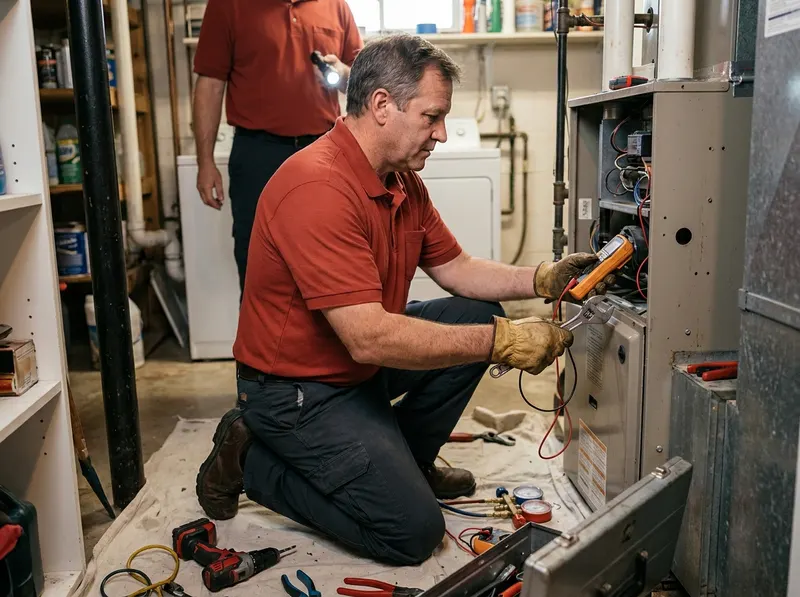
Diagnosing gas furnace ignition failures, faulty hot surface igniters, worn inducer draft motors, malfunctioning flame sensors, clogged pressure switch ports, and failed safety limit switches. Every heating service call includes a thorough inspection of the heat exchanger using high-resolution combustion cameras to identify hairline cracks and prevent carbon monoxide risks. Technicians verify gas manifold supply pressures, adjust burner air shutters for complete combustion, inspect thermocouple and pilot assemblies on older units, and clean ignition components to restore safe, dependable heating before winter freezes settle over Tulsa County.
View details →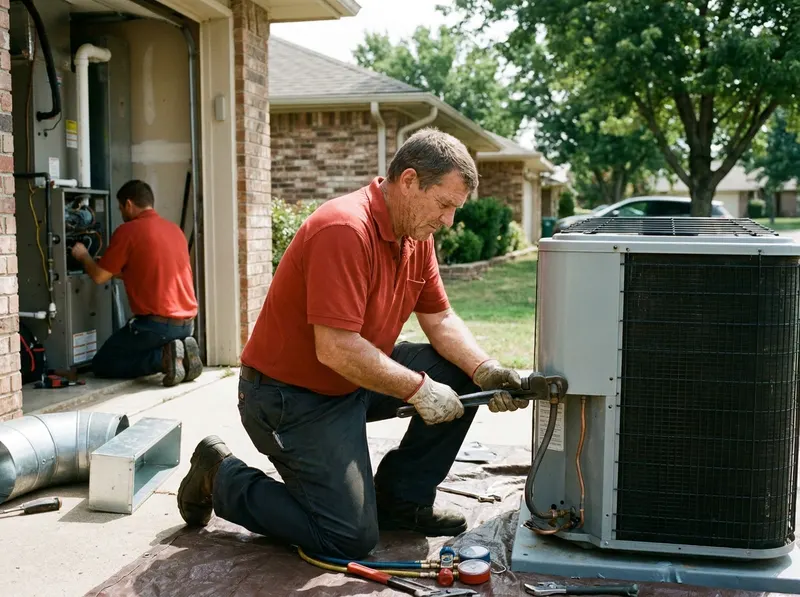
Designing and installing high-efficiency central air conditioners, gas furnaces, and inverter heat pumps tailored to your home's square footage, window exposure, and insulation profile. Every installation adheres to Manual J residential load calculations to prevent improper equipment sizing, short-cycling, and premature compressor wear. Complete replacements include setting outdoor condensing units on composite hurricane pads, replacing indoor cased evaporator coils, installing new refrigerant line sets or chemically flushing existing copper tubing, upgrading condensate drain overflow safety float switches, and pulling required municipal permits through the City of Tulsa Development Services department.
View details →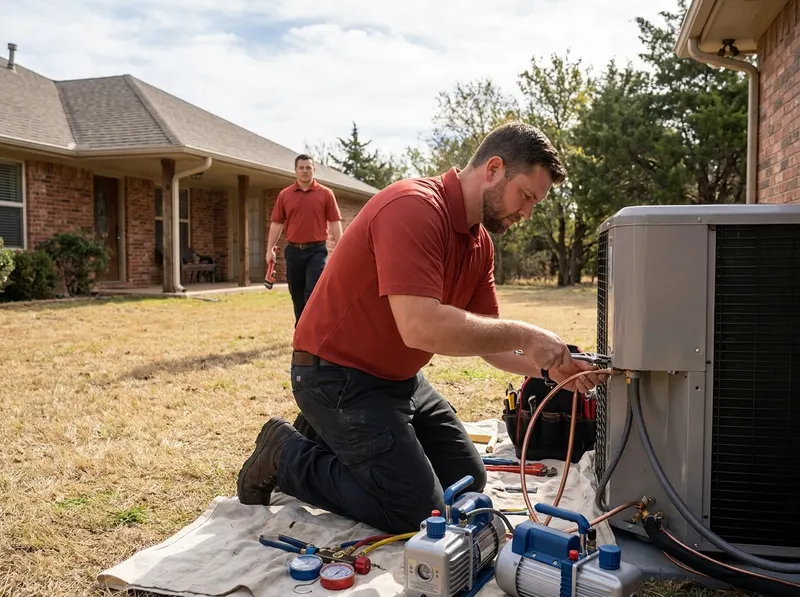
Servicing and installing modern all-electric heat pump systems capable of delivering efficient dual-fuel heating and cooling through Oklahoma's volatile weather shifts. Our technicians calibrate four-way reversing valves, electronic expansion valves (EEVs), defrost control boards, and auxiliary heat strip sequencers for steady year-round thermal control. Heat pump tune-ups and diagnostic visits ensure accurate refrigerant subcooling measurements in cooling mode and correct discharge pressure balance in heating mode, keeping heating and cooling costs low through all four seasons.
View details →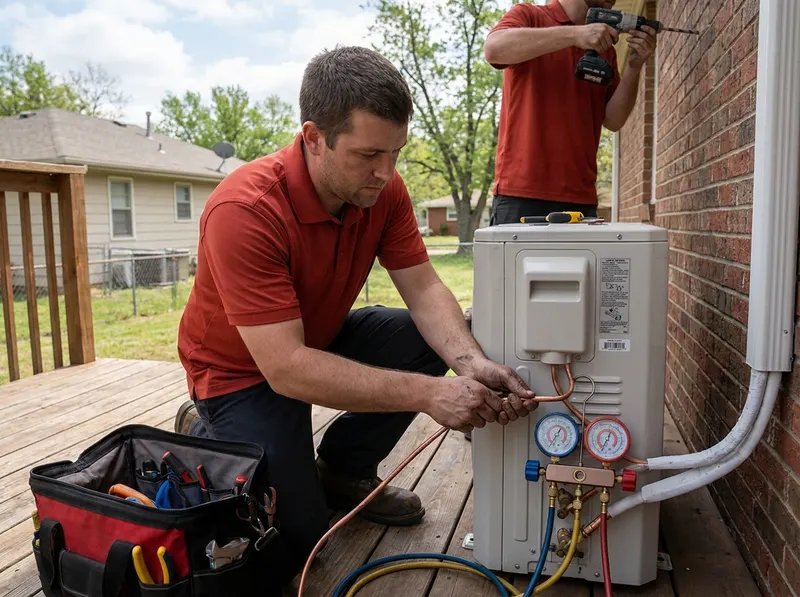
Installing wall-mounted and ceiling-cassette ductless multi-zone systems for historic residences, finished basements, room additions, sunrooms, and detached garages where traditional ductwork is impractical. These systems utilize inverter-driven variable-speed compressors to deliver independent room-by-room temperature zones while maintaining exceptional SEER2 energy efficiency ratings. Technicians handle dedicated line set flaring, vacuum decay testing down to 500 microns, condensate lift pump installations, and multi-zone communication wiring across single and multi-head configurations.
View details →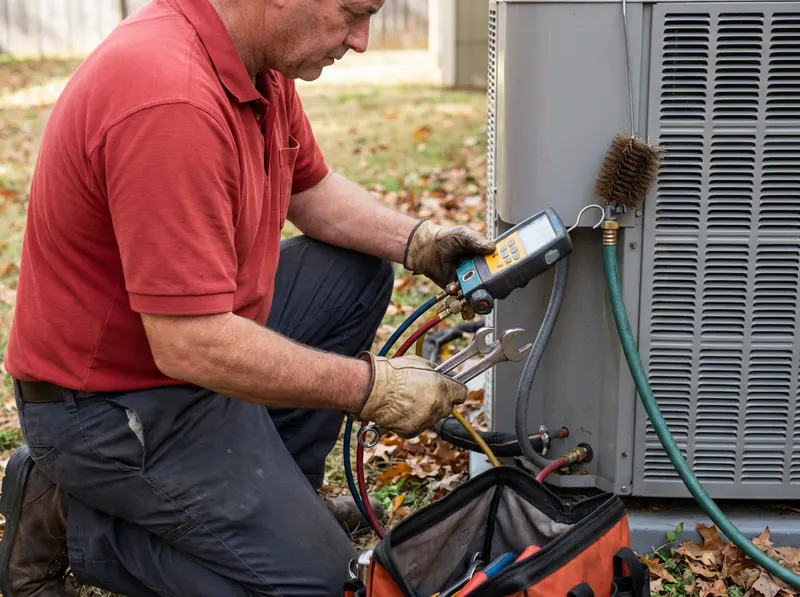
Performing multi-point spring AC checkups and fall heating safety inspections to catch minor mechanical wear before it leads to system breakdowns. Spring cooling maintenance includes chemically cleaning outdoor condenser coils to remove embedded dirt and cottonwood seeds, testing capacitor capacitance microfarads, clearing condensate drain lines with pressurized nitrogen, and lubricating motor bearings. Fall heating visits encompass burner assembly cleaning, flame rectification microamp testing, static pressure verification across the air filter, heat exchanger integrity testing, and carbon monoxide testing at supply registers.
View details →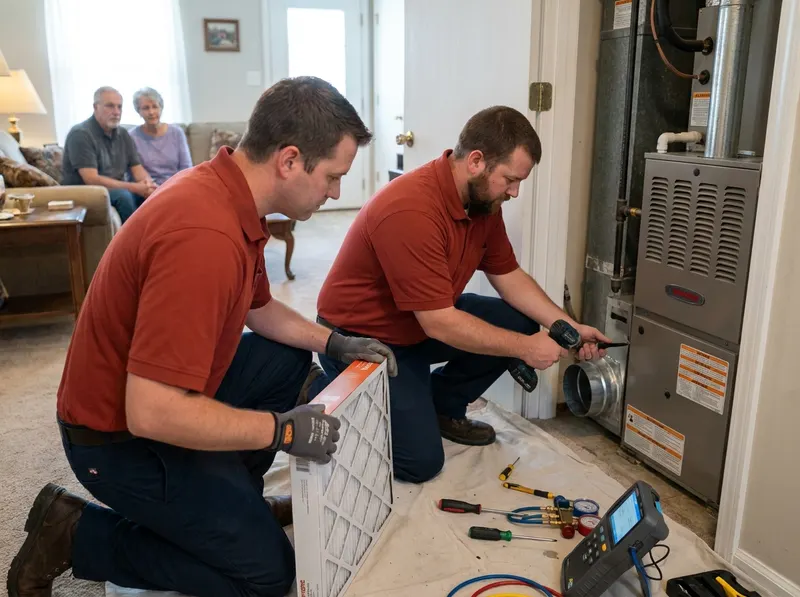
Upgrading residential air distribution networks with whole-home high-efficiency media air cleaners, MERV 11 to MERV 16 filtration cabinets, UV germicidal purifiers, and central bypass or steam humidifiers. Technicians assess indoor particulate levels and high humidity levels typical of the Arkansas River basin, installing whole-home dehumidifiers directly into central duct plenums to control indoor relative humidity below 50%, reduce mold spore reproduction, and eliminate stale indoor air odors without overcooling the home.
View details →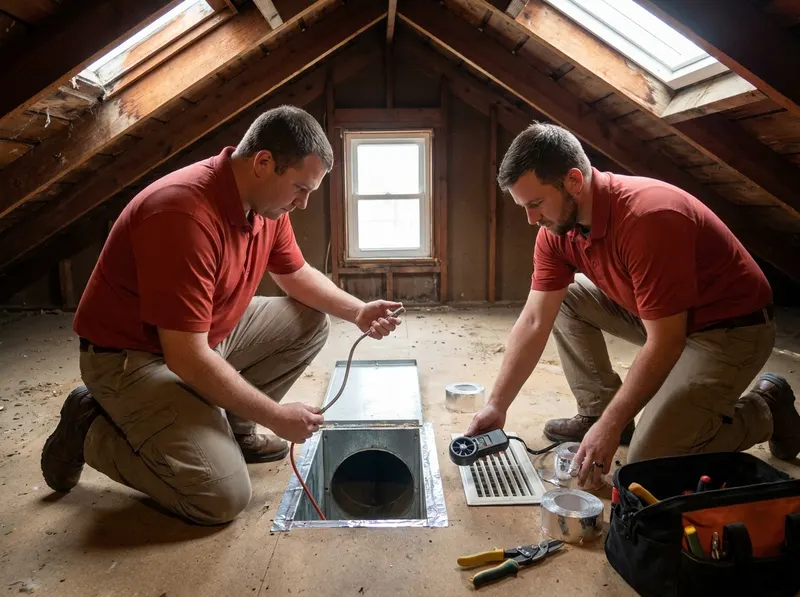
Sealing leaky sheet metal ducts, replacing deteriorated or collapsed flexible ductwork runs, insulating attic supply lines to prevent summer condensation sweating, and installing manual balancing dampers to resolve persistent hot and cold spots across multi-story floor plans. Technicians conduct static pressure testing across the supply and return plenums to calculate total external static pressure (TESP), ensuring the blower motor operates within factory specifications and delivers balanced CFM airflow to every room in the home.
View details →HVAC in Tulsa is the mechanical heating, ventilation, and cooling service that maintains safe indoor temperatures and balanced indoor humidity across Green Country residential properties.
You get a firm, itemized quote for your hvac before any work begins — no surprises, no pressure.
Careful prep, tidy work, and a full cleanup when we are done. We treat your home and belongings like our own.
The same trusted, background-checked team from the first call to the final check.
Choosing the correct heating and cooling pathway requires weighing system age, equipment condition, refrigerant chemistry, and seasonal energy loss. If your cooling unit is under ten years old and running on R-410A refrigerant, repairing a failed blower motor, dual run capacitor, contactor, or control board is almost always the most economical choice. If your system is over twelve to fifteen years old, still relies on phased-out R-22 Freon, and suffers a major mechanical fault like a grounded compressor or a leaking evaporator coil, choosing a full modern system replacement delivers far better long-term reliability. The trade-off is paying a higher upfront installation cost versus repeatedly spending money on escalating repairs and inefficient electricity bills during Tulsa summer heatwaves. When evaluating replacement equipment, Tulsa homeowners face a clear choice between conventional gas furnace and split air conditioning systems, hybrid dual-fuel systems, and high-efficiency inverter heat pumps. If your home has access to natural gas through Oklahoma Natural Gas (ONG) and existing sheet metal ductwork, an 80% or 96% AFUE two-stage gas furnace paired with a 15.2 to 17 SEER2 single-stage or two-stage central air conditioner provides reliable high-heat output during sudden sub-zero winter blasts while keeping summertime cooling costs controlled. If your property relies entirely on electric utility service through Public Service Company of Oklahoma (PSO), an inverter-driven variable-speed heat pump delivers exceptional cooling efficiency in the summer and operates economically down to roughly 15°F, switching over to auxiliary electric resistance heat strips only during severe winter freezes. The trade-off with variable-capacity heat pumps is a higher initial equipment investment in exchange for substantially lower monthly electrical consumption and quieter indoor sound levels. Architectural considerations across Tulsa also dictate equipment design. For historic residences in neighborhoods like Swan Lake, Florence Park, or Brady Heights that feature solid masonry, lath-and-plaster walls, and no existing duct infrastructure, installing a ductless mini-split system provides targeted multi-zone cooling without tearing into historic ceilings or walls. Conversely, a traditional central split system remains the standard for single-family properties with established attic or crawlspace duct distribution networks throughout neighborhoods such as Southern Hills, Midtown, and Gilcrease Hills. Ductless units allow independent room-by-room temperature management, whereas ducted systems condition the entire perimeter evenly through a centralized thermostat.
Every project gets a firm, written price after a free on-site visit. Ranges below for orientation.
Tell us about your hvac job and we'll send a clear, written quote — usually the same day. Or just call and talk to a real tulsa pro.
Tulsa's regional climate places severe mechanical stress on residential climate control systems throughout every season of the year. In mid-summer, high-pressure heat domes trap humid air across the Arkansas River valley, driving outdoor temperatures well above 95°F with high heat indices that force central air conditioners to run extended cooling cycles for up to 14 hours per day. This prolonged duty cycle accelerates electrical wear on dual run capacitors, condenser fan motors, and compressor contactors, particularly in older neighborhoods like Brookside, Maple Ridge, and Florence Park where dense tree canopies shed leaves and cottonwood seeds that clog aluminum condenser fins. In winter, sudden arctic cold fronts sweep south across the Great Plains, causing rapid 40-degree temperature drops within hours that push older 80% AFUE natural gas furnaces and aging heat pump defrost controls to their functional limits. Homes built throughout the mid-20th century in Midtown and Kendall-Whittier often feature undersized return air plenums and uninsulated sheet metal duct runs routed through unconditioned attic spaces, resulting in high external static pressure, duct sweating, and uneven cooling between main levels and upper bedrooms. Furthermore, expansive clay soils common across Tulsa County cause subtle foundation shifting that can torque outdoor condenser pads, stress rigid copper refrigerant lines, and dislodge gravity-fed PVC condensate drain lines in crawlspace foundations. Modern installations near Southern Hills, Riverview, and Gilcrease Hills increasingly incorporate two-stage and variable-speed inverter systems paired with whole-home dehumidification to manage Green Country humidity effectively without causing excessive electrical consumption on Public Service Company of Oklahoma (PSO) power grids or driving up Oklahoma Natural Gas (ONG) heating bills during sudden freeze events.
 Air Wave HVAC